Islamic Calendar 2027 March
Welcome All! The Islamic Calendar 2027 March (HIJRI Calendar) Free pdf can be downloaded here.
Islamic Calendar 2027 March : March 2027 Islamic Calendar with Islamic festivals, Roza (روزہ) and important dates in one place? This article covers the month’s important Islamic occasions, fasting days and holidays in a simple calendar format. The March 2027 Islamic calendar PDF is given below on this page.
March runs through Ramzan and Shawwal in the Hijri calendar, with Ramzan 1448 Hijri (رمضان 1448 ہجری) continuing into the month before Shawwal begins. The month includes Laylat al-Qadr (شبِ قدر), Jumma-tul-Wida, Eid-ul-Fitr (عید الفطر), the Ayyam al-Beed fasts and the regular Jumma (جمعہ) days. The expected date of each listed occasion appears in the table below.
Islamic Calendar 2027 March
Here is the (Hijri) islamic Calendar for March 2027 for you to read.
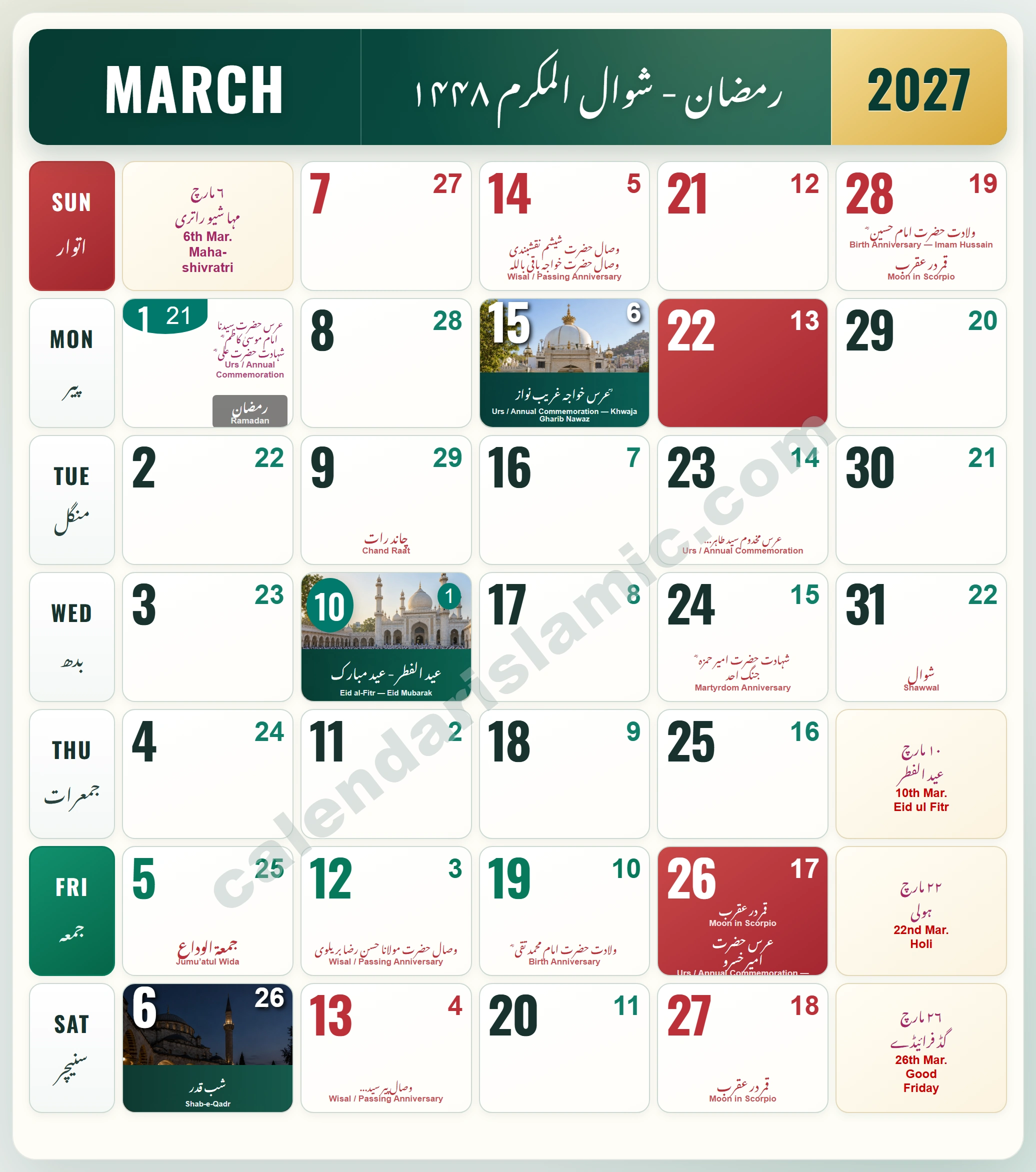
Islamic Calendar 2027 March Calendar Festivals And Important Date\
The following table lists the main occasions expected during March, including the final days of Ramzan, Eid-ul-Fitr and voluntary fasting days in Shawwal.
| Date | Day | Islamic Date (Hijri) | Festival / Occasion |
|---|---|---|---|
| 5 March | Friday | 26 Ramzan 1448 | Jumma-tul-Wida |
| 5 March | Friday evening | 27 Ramzan 1448 | Laylat al-Qadr (night), expected |
| 6 March | Saturday | 27 Ramzan 1448 | Laylat al-Qadr (27th night), alternate expected observance |
| 10 March | Wednesday | 1 Shawwal 1448 | Eid-ul-Fitr, expected |
| 22–24 March | Monday–Wednesday | 13–15 Shawwal 1448 | Ayyam al-Beed, expected |
Islamic dates depend on the sighting of the Chand (چاند), so every date here is expected and can shift by a day in your area. The Islamic day begins at sunset, so a night of worship starts on the evening shown.
Hijri Months and Jumma Dates in March 2027
March begins during Ramzan 1448 Hijri (رمضان 1448 ہجری), the month of fasting, and continues into Shawwal 1448 Hijri (شوال 1448 ہجری), the month that begins with Eid-ul-Fitr. Shawwal is expected to begin on 10 March in India, although 9 March is another reported possibility. For the Urdu search phrase مارچ اسلامی کیلنڈر 2027, these two Hijri months are the main ones to keep in mind.
The Jumma dates in March 2027 are 5, 12, 19 and 26 March. Many Muslims prepare for Jumma by performing ghusl, wearing clean clothes and reaching the mosque early for Jumma Namaz. The last Friday of Ramzan is commonly known as Jumma-tul-Wida, although its date depends on the beginning of Ramzan.
Major March 2027 Islamic Festivals and Occasions Explained
Jumma-tul-Wida – 5 March
Jumma-tul-Wida means the farewell Friday of Ramzan. It is the final Friday of the fasting month in the expected calendar, giving many Muslims an opportunity to attend Jumma Namaz, make dua and reflect on their worship during Ramzan.
The expected daytime Hijri date is 26 Ramzan 1448. If the beginning of Ramzan differs locally, the final Friday may fall on another date.
In many Indian communities, people make extra time for the mosque, charity and helping people in need. Some mosques may arrange special gatherings, while others observe the day through the regular Friday prayer.
Laylat al-Qadr – 5 March evening
Laylat al-Qadr, also called Shab-e-Qadr (شبِ قدر), is a deeply respected night during Ramzan. According to Islamic tradition, it is associated with the revelation of the Quran, and Muslims seek Allah’s mercy, forgiveness and guidance during the final nights of the month.
The 27th night of Ramzan 1448 is expected to begin after sunset on 5 March. Some communities may observe it on the following evening because of differences in the beginning of Ramzan. Islamic tradition encourages seeking this blessed night during the last ten nights, particularly the odd-numbered nights.
Many people spend time in Namaz, Quran recitation and personal dua. At home, the evening may be kept simple, with a light meal and time set aside for worship rather than elaborate preparations.
Eid-ul-Fitr – 10 March
Eid-ul-Fitr (عید الفطر) marks the end of Ramzan and the beginning of Shawwal 1448 Hijri. It is a major Islamic festival associated with gratitude to Allah, communal prayer, charity and sharing food.
Eid-ul-Fitr is expected on Wednesday, 10 March, in India, with Tuesday, 9 March, also reported as a possible date. The final observance depends on the Shawwal crescent sighting and the announcement followed by the local Muslim community.
In many homes, preparations include cleaning, arranging clothes, preparing sewaiyan or sheer khurma and sharing meals. Muslims commonly attend Eid Namaz, exchange greetings and give charity according to Islamic practice. The details of Eid prayer and charity should be checked with a local imam or scholar when guidance is needed.
Ayyam al-Beed – 22 to 24 March
Ayyam al-Beed refers to the 13th, 14th and 15th days of a Hijri month. These days are commonly associated with voluntary fasting, and many Muslims observe them when health and circumstances permit.
The expected dates in Shawwal 1448 are 22, 23 and 24 March. They may move by a day depending on the confirmed start of Shawwal.
Those who choose to fast usually plan Sehri and Iftar in advance and keep meals balanced. These are voluntary fasts, so people should not feel pressured to observe them if fasting is unsuitable for their health or circumstances. Ask a local scholar about any specific religious question.
The beginning of Shawwal – 10 March
Shawwal is the tenth month of the Hijri calendar and follows Ramzan. Its first day is associated with Eid-ul-Fitr, while the rest of the month offers an opportunity to continue good habits developed during Ramzan.
Shawwal 1448 is expected to begin on 10 March, although 9 March remains a possible alternative. The month also includes the Ayyam al-Beed and the voluntary six fasts of Shawwal, which many Muslims choose to observe according to their practice.
Everyday life gradually returns to its usual routine after Eid. Some people continue regular Quran recitation, charity and voluntary fasting, while others focus on maintaining a balanced routine after the month of Ramzan.
Roza Rules, Food and Precautions for March 2027
March begins during the final part of Ramzan 1448, when obligatory fasting continues for those required and able to fast. After Eid-ul-Fitr, voluntary fasts may include Mondays, Thursdays, Ayyam al-Beed and the six fasts of Shawwal. Fasting is not observed on Eid-ul-Fitr itself. Voluntary fasts remain voluntary, and people should seek advice from a local imam or scholar about personal religious circumstances.
Commonly chosen Sehri and Iftar foods:
- Dates, water and fresh fruit for a simple Iftar.
- Roti, dal, eggs, curd or other suitable foods at Sehri.
- Light home-cooked meals, soup or seasonal drinks to maintain comfort.
- All food and drink should be halal.
Things avoided during a roza:
- Eating, drinking and smoking from dawn to sunset while observing the fast.
- Quarrelling, lying and backbiting, which Islamic teaching encourages Muslims to avoid.
- Overeating fried, oily or very salty foods at Iftar, especially when they cause discomfort.
Practical precautions:
- Drink sufficient water between Iftar and Sehri when fasting, particularly as March becomes warmer in many parts of India.
- Plan balanced meals and avoid skipping necessary medicines without medical advice.
- Keep food fresh, clean and safely stored, especially during warmer weather.
- Children, pregnant or nursing women, older adults, travellers and people with health conditions should not be pressured to fast. Islam provides concessions in appropriate circumstances; speak with a doctor and a local scholar when needed.
- Check your local mosque timetable for Sehri and Iftar. These timings vary by location and date.
How the Major March 2027 Occasions Are Observed
Jumma-tul-Wida
The final Friday of Ramzan is an opportunity for many Muslims to attend congregational prayer and reflect on the month. Some homes prepare a simple meal before or after the day’s activities, while others keep the routine unchanged.
- Prepare clean clothes and make time for personal cleanliness.
- Perform wuzu before Namaz.
- Reach the mosque in time for the Jumma prayer.
- Listen to the khutbah and take part in the prayer.
- Give charity or help someone in need, according to one’s means.
Customs differ between communities. Ask a local imam if you need guidance about any particular observance.
Laylat al-Qadr
Many Muslims devote the final nights of Ramzan to worship and seek Allah’s forgiveness. Some stay at the mosque, while others pray at home and keep the evening peaceful.
- Arrange meals and household tasks early.
- Perform wuzu and offer Namaz according to one’s practice.
- Recite the Quran or listen to its recitation.
- Make dua in one’s own words.
- Give charity where possible and avoid unnecessary distractions.
Communities differ in how they observe the night and which night they emphasise. A local imam or scholar can explain the practices followed in your community.
Eid-ul-Fitr
Eid marks the completion of Ramzan and is commonly celebrated with prayer, charity, greetings and shared meals. Many homes prepare sewaiyan or sheer khurma, while others serve their usual festive dishes.
- Prepare clothes and necessary arrangements in advance.
- Follow the local mosque’s guidance on Eid Namaz and its timing.
- Complete any required charity arrangements according to Islamic guidance.
- Attend Eid Namaz and exchange greetings with others.
- Share food, help people in need and spend time in good company.
Eid customs vary across regions and schools of thought. Ask a local imam or scholar about specific religious requirements.
Ayyam al-Beed
The middle days of Shawwal offer an opportunity for voluntary fasting. Those who observe these fasts generally plan meals, work and rest around their needs.
- Confirm the Hijri dates followed by your local community.
- Decide whether voluntary fasting is suitable for your circumstances.
- Arrange a balanced Sehri before beginning the fast.
- Observe the fast according to your religious practice.
- Break the fast at the locally prescribed time and maintain adequate hydration afterward.
These fasts are voluntary, and practice can differ. Seek medical advice when fasting may affect your health, and consult a local scholar about religious questions.
Frequently Asked Questions
Which Hijri months fall in March 2027?
March runs through Ramzan 1448 Hijri (رمضان 1448 ہجری) and Shawwal 1448 Hijri (شوال 1448 ہجری). The exact transition depends on the crescent sighting.
Why can Islamic dates differ by a day from place to place?
Islamic months begin with the crescent sighting, and communities may follow different sighting announcements or calendar methods. Therefore, all dates in this calendar are expected and may shift by a day.
Which are the main Islamic festivals and fasts in March 2027?
The main occasions are Jumma-tul-Wida, Laylat al-Qadr, Eid-ul-Fitr, Ayyam al-Beed and the voluntary fasts of Shawwal. For مارچ اسلامی کیلنڈر 2027, confirm the final dates locally.
Are Namaz, Sehri and Iftar timings the same in every city?
No. Namaz, Sehri and Iftar timings depend on your location and the date. Always check your local mosque timetable instead of relying on a general calendar.
How should I use the March 2027 Islamic calendar PDF?
Use the PDF to check expected Hijri dates, festivals, fasting days and Jumma dates. Confirm moon-dependent occasions with your local mosque before making final arrangements.
Conclusion
On this Article, I have given the (Hijri Calendar) Islamic calendar of March 2027 Month and I have also told when are the festivals and Fasts in March in the complete table format and when are the fasts in this Article post, if you liked this Article then definitely share it with your friends and family and you can read other Month Calendarz on our site , thank you visit our Article.